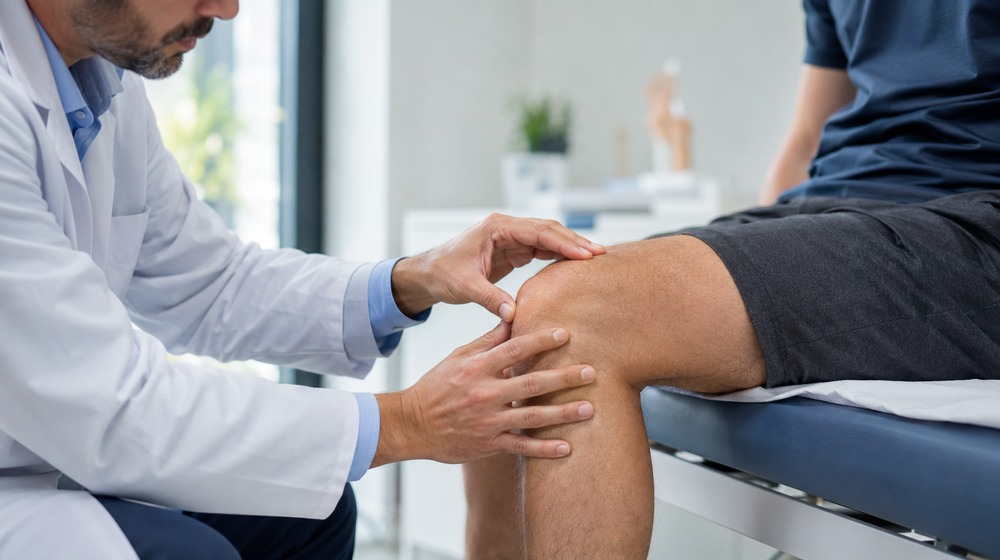
What does recovery after knee replacement actually mean?
Knee replacement is one of the most successful orthopedic procedures for advanced arthritis, but the operation itself is only the first step. Recovery is the period in which the surgical wound heals, swelling settles, surrounding muscles regain strength, and the new joint becomes a natural part of how you walk, sit, stand and climb stairs.
Every patient recovers at a slightly different pace. Age, overall health, fitness before surgery, surgical technique and how consistently physiotherapy is followed all influence the timeline. Understanding the stages in advance helps set realistic expectations and reduces the anxiety that often comes with the first weeks at home.
At International Joint Center, recovery plans are individualized. The milestones below describe a typical pathway for many patients, but your surgeon and physiotherapist will adapt them to your specific case.
The first days in hospital: what to expect
Most patients stay in hospital for 1–3 days after knee replacement. During this period the care team focuses on pain control, early mobility, wound monitoring and preparing you to continue rehabilitation safely at home.
Physiotherapy often begins on the day of surgery or the morning after. Under supervision, patients practice sitting on the edge of the bed, standing with a walker or crutches, taking short walks along the ward and, when ready, managing a few stairs. These early sessions are not about speed — they are about establishing safe movement patterns and reducing the risk of complications such as blood clots and joint stiffness.
Nurses and doctors monitor vital signs, wound dressing, swelling and any signs of infection. Blood-thinning medication, compression stockings or calf pumps may be used depending on individual risk. You will also receive clear instructions on medication schedules, warning signs to watch for, and how to care for the incision once you leave hospital.
- Typical hospital stay: 1–3 days
- Walking with support usually begins within 24 hours
- Physiotherapy focuses on safe transfers, short walks and early range of motion
- Pain, swelling and bruising are expected and are actively managed
- Discharge happens when you can mobilize safely and understand your home plan
A week-by-week look at the first two months
Recovery is easiest to understand when broken into stages. The timelines below are approximate and can shift based on your progress, but they give a useful framework for planning work leave, travel and family support.
- Days 1–7: Focus on wound care, swelling control, short walks and basic exercises. Sleep may be disrupted by discomfort; icing and elevation help.
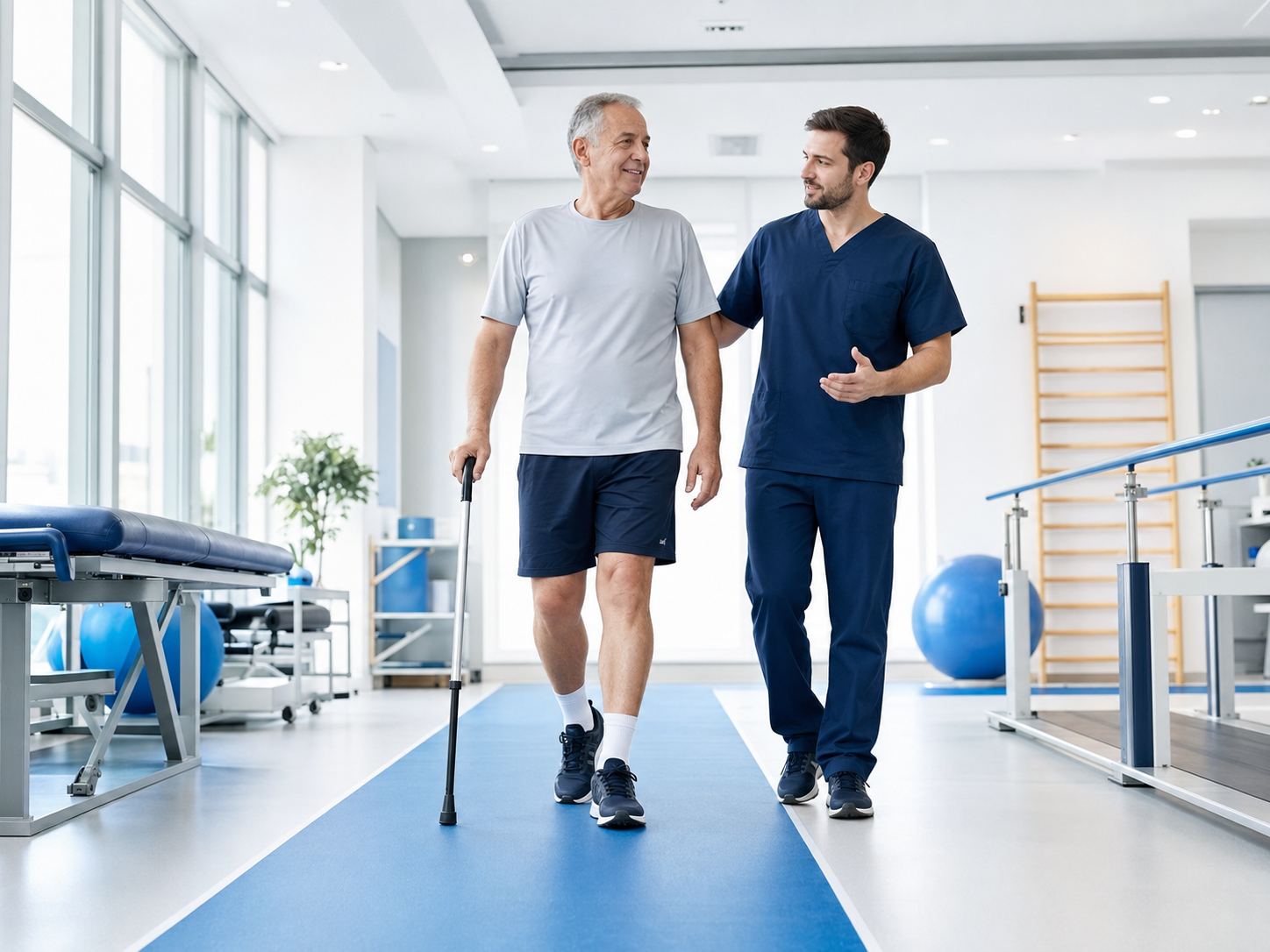
- Weeks 2–3: Stitches or staples may be removed if used. Walking distance increases. Many patients reduce reliance on a walker and move toward crutches or a cane.
- Weeks 4–6: Range of motion improves with consistent physiotherapy. Light household activities become more comfortable. Driving may resume once your surgeon confirms it is safe — often around this window for the non-driving leg, and later for the driving leg.
- Weeks 6–8: Many patients return to desk work and more independent daily routines. Swelling is usually reduced, though some residual puffiness can linger.
- Months 2–3: Strength training becomes more progressive. Endurance for longer walks improves. High-impact sport and heavy lifting remain restricted until cleared.
- Months 3–6 and beyond: Function continues to refine. Most patients feel substantially stronger and more confident; full recovery of strength and comfort can continue for up to a year.
Why physiotherapy is the heart of recovery
A successful knee replacement depends as much on rehabilitation as on surgical technique. Physiotherapy rebuilds the muscles that stabilize the joint, restores bending and straightening range, and retrains walking so the new implant is used efficiently and safely.
Sessions typically combine guided exercises, gait training, balance work and education on how to move at home without putting the joint at risk. Your physiotherapist will set measurable goals — for example, reaching a certain degree of knee flexion, walking a set distance without a limp, or climbing a flight of stairs with control.
Skipping sessions or stopping exercises early is one of the most common reasons patients feel stiff or weak months later. Consistency matters more than intensity in the early phase. Short, regular sessions done correctly usually outperform occasional hard efforts.
- Attend scheduled physiotherapy sessions even when you start feeling better
- Practice home exercises daily as prescribed — they are not optional extras
- Report new sharp pain, sudden swelling or locking so the plan can be adjusted
- Ask for clarification if any exercise feels unclear or unsafe
- Progress gradually; do not jump ahead to advanced drills without clearance
Managing pain and swelling at home
Some discomfort after knee replacement is normal. Modern multimodal pain strategies — combining different medications and non-drug methods — help most patients stay comfortable enough to participate in physiotherapy, which is essential for a good result.
Ice packs applied for short periods, elevating the leg above heart level when resting, and wearing any recommended compression can all reduce swelling. Overdoing activity in the first weeks often leads to a rebound of swelling the next day, so pacing matters.
Follow the medication schedule given at discharge. Do not wait until pain becomes severe before taking prescribed doses in the early phase, and do not combine over-the-counter painkillers with prescribed ones unless your doctor has confirmed it is safe. Constipation from opioid medication, if used, is common — ask about stool softeners and fluid intake if needed.
- Ice and elevate regularly in the first weeks
- Keep the wound clean and dry as instructed
- Take pain medication on schedule rather than waiting for peaks
- Balance rest with the short walks your physiotherapist recommends
- Contact your care team if pain suddenly worsens or is not controlled
Preparing your home before surgery
A few practical changes at home can make the first weeks after discharge far easier. Arranging these before surgery means you are not improvising while still recovering from anaesthesia and limited mobility.
Clear walkways of loose rugs and clutter. Place frequently used items at waist height so you do not need to bend or reach high shelves. A stable chair with arms, a raised toilet seat if recommended, and a non-slip bath mat are useful for many patients. If your bedroom is upstairs, discuss with your care team whether sleeping downstairs for a short period is safer.
Arrange help for shopping, cooking and transport for at least the first one to two weeks. Many patients underestimate how tiring the early recovery period feels, even when pain is well controlled.
Returning to work, driving and activity
Return-to-work timing depends on the physical demands of your job. Desk-based roles often resume around 6–8 weeks if recovery is progressing well. Jobs that involve prolonged standing, heavy lifting or uneven ground usually require a longer period and specific clearance from your surgeon.
Driving should only restart when you can safely operate the pedals, react quickly and are no longer taking medications that impair alertness. This is often earlier when the non-driving leg was operated on, and later when the driving leg was replaced. Never drive until your surgeon confirms it is appropriate.
Low-impact activities such as walking, stationary cycling and swimming (once the wound is fully healed and approved) are typically encouraged as recovery advances. High-impact sports, deep kneeling for long periods and heavy lifting are usually delayed and may remain restricted depending on your implant and lifestyle goals.
- Desk work: often around 6–8 weeks if cleared
- Physical work: longer timeline, individualized clearance required
- Driving: only after surgical clearance and safe reaction ability
- Low-impact exercise: gradually introduced under physiotherapy guidance
- High-impact sport: deferred until strength and stability are confirmed
When to contact your care team urgently
Most recoveries progress without major problems, but knowing the warning signs helps you act quickly if something is wrong. Early attention to infection, blood clots or implant-related issues protects long-term outcomes.
- Increasing redness, warmth, discharge or foul odor from the wound
- Fever, chills or feeling generally unwell
- Calf pain, sudden leg swelling, chest pain or shortness of breath
- Inability to bear weight that was previously possible
- Sudden giving-way, locking or a sharp change in how the knee feels
- Pain that rapidly worsens despite following the prescribed plan
What successful long-term recovery looks like
By three to six months, many patients notice a clear reduction in the arthritis pain that led them to surgery, along with improved walking tolerance and sleep. Some residual stiffness or weather-related ache can still occur, particularly in the first year, and does not necessarily mean something is wrong.
Protecting the implant long term means staying active at an appropriate level, maintaining a healthy weight, attending follow-up visits and seeking advice early if new symptoms appear. Modern knee replacements are designed to last many years; how you care for the joint after surgery plays a meaningful role in that longevity.
If you have questions at any stage of recovery, the IJC team can review your progress, adjust physiotherapy goals and help you plan the next steps with confidence.